
Ocean container freight charges remained elevated on main east-west commerce lanes, whilst container carriers’ rising return to the Pink Sea and an increasing world fleet raised the prospect of downward stress on costs in 2027.
Asia-Europe costs have been broadly steady for the week ending Nov. 13, whereas trans-Pacific charges edged increased, in accordance with analyst and SONAR information contributor Freightos (NASDAQ: CRGO). Congestion, increased gasoline prices and transportation disruptions continued to assist costs, however carriers’ makes an attempt to safe additional will increase confronted resistance.
Container carriers are persevering with to revive Asia-Europe providers via the Suez Canal and Pink Sea, lowering their reliance on diverted voyages round Africa. That’s been the case since late 2023, when Houthi rebels in Yemen attacked delivery in assist of Gaza. On the similar time, observers say latest violence involving service provider vessels in places starting from the Black Sea to the Strait of Hormuz and Somalia are probably serving to to assist increased charges, as effectively.
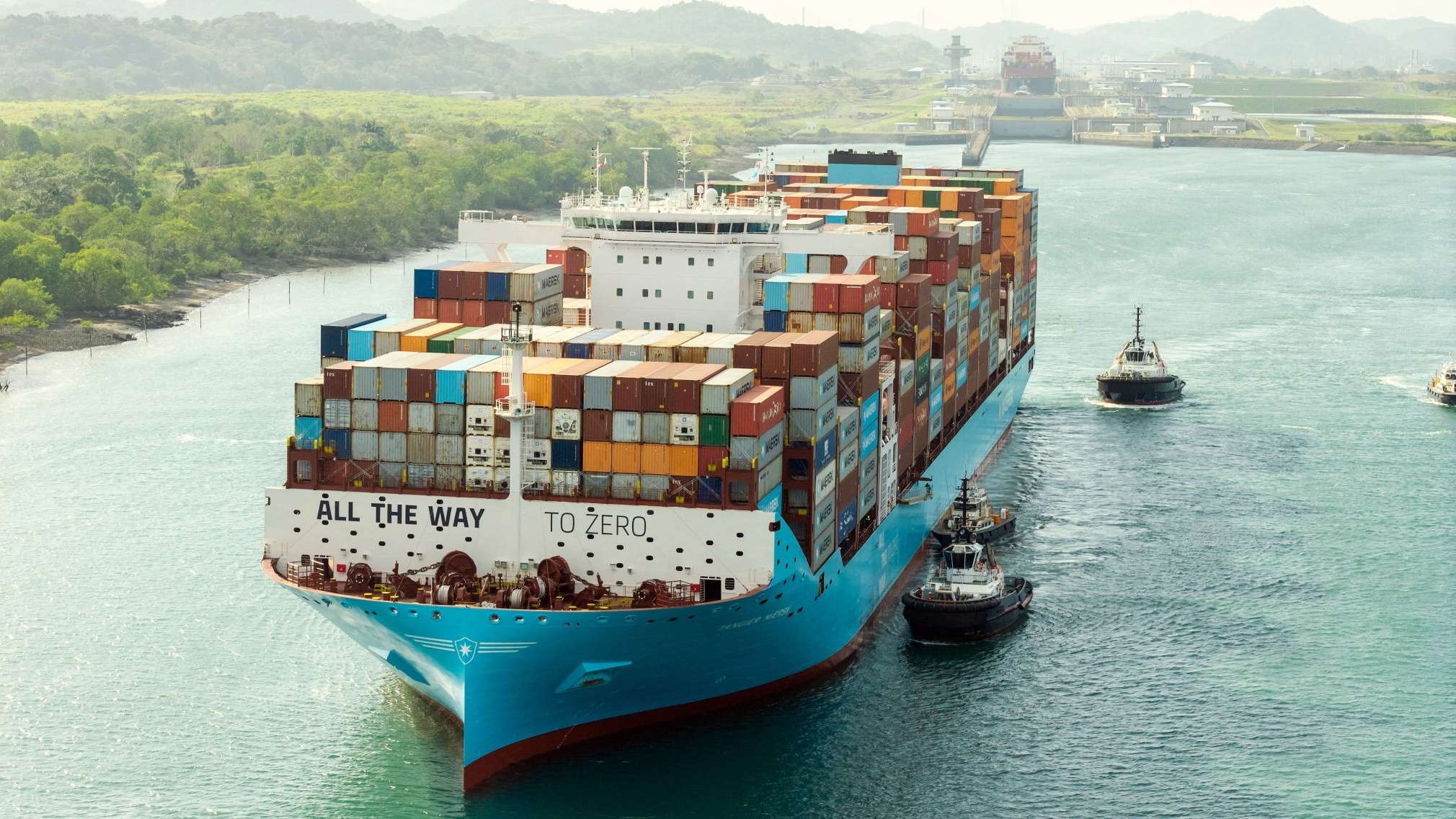
Maersk and Hapag-Lloyd introduced on November 16 that their Gemini AE1, AE2 and AE3 providers would return to the trans-Suez route, with the primary departures beneath the revised preparations scheduled for December and January. The adjustments stay depending on continued stability within the area.
Shorter voyages cut back the time vessels spend finishing service rotations, rising efficient delivery capability. That shift coincides with substantial fleet development, as Alphaliner figures put the containership orderbook at 15.12 million twenty-foot equal items, equal to 43.9% of the buying and selling fleet, with fleet capability projected to develop 9.2% in 2027.
Collectively, fleet enlargement and shorter routes enhance the chance that accessible capability will outpace cargo demand, weakening carriers’ pricing energy subsequent yr.
For now, lingering congestion and better gasoline prices proceed to assist Asia-Europe container costs, which the provided market replace locations 40%–50% above year-earlier ranges.
Asia-North Europe charges have been broadly unchanged at about $3,400 per forty-foot equal unit, or FEU, though they have been down 5% from the top of October. Asia-Mediterranean costs have been additionally roughly regular at $4,300 per FEU.
The soundness means that carriers’ early-November basic fee will increase didn’t take maintain, elevating doubts about one other spherical of mid-month hikes.
Carriers are responding to the demand lull by rising blanked — delayed or cancelled — scheduled voyages to limit accessible capability. Printed studies cite eight Asia-Europe sailings have been scheduled to be blanked the next week, up from 5.
French dockworkers and port workers have been referred to as to hitch a 24-hour stoppage on November 17, whereas Spanish terminals have been recovering from a November 11 basic strike whose impression assorted by location. Whereas centered in Europe, job actions and different disruptions have a nasty approach of dominoeing via the availability chain.
Freightos famous that carriers are getting ready additional worth will increase for late November and December, with pre-Lunar New 12 months delivery demand probably offering stronger assist.
Trans-Pacific charges remained close to peak ranges, edging up final week to $8,460 per FEU to the U.S. West Coast and $9,850 per FEU to East Coast hubs.
Different benchmarks confirmed some softening. Drewry’s World Container Index recorded weekly declines on Shanghai-Los Angeles and Shanghai-New York providers, whereas forwarders reported reductions under printed charges, highlighting variations between market measures and particular person bookings.
Delays from inland challenges
Past ocean pricing, inland transportation continues to pose challenges. Containers transferring by rail via Los Angeles and Lengthy Seaside face delays, with report Asian import volumes and storm-related disruption on BNSF’s Southern Transcon community worsening Southern California rail dwell occasions.
A November 20 strike deadline at LA-Lengthy Seaside involving watchmen with Worldwide Longshore and Warehouse Union Native 26 poses an extra operational threat, although contract bargaining continues.
US-China talks complicate the commerce outlook
President Donald Trump is scheduled to satisfy Chinese language President Xi Jinping this week, forward of the January 10 expiration of the interim US-China commerce settlement.
Though additional de-escalation stays potential, divisions inside the administration and renewed know-how restrictions have added uncertainty. The Wall Avenue Journal reported disagreements amongst Trump’s advisers over the course of China coverage forward of the summit. It’s additionally unsure how China will method dealmaking with the specter of a Democratic congress set to take management in January.
Washington has additionally moved to limit Chinese language entry to superior American synthetic intelligence chips via abroad computing infrastructure, including one other level of friction earlier than the talks.
The end result might affect delivery demand and the timing of cargo actions as companies assess the sturdiness of the commerce settlement.
Panama Canal eases restrictions as water circumstances enhance
Improved rainfall has allowed the Panama Canal Authority to ease restrictions launched after lower-than-normal precipitation over the summer time.
In a November 9 advisory, the authority elevated whole every day reserving capability to 34 transit slots and restored the utmost approved draft for vessels utilizing the Neopanamax locks to 50 toes. It cited improved water circumstances, favorable hydrological projections and water-saving measures.
El Niño stays a threat, though latest forecasts have diminished the likelihood of an exceptionally extreme occasion. Bloomberg reported that the US Local weather Prediction Heart lowered the probability of the occasion exceeding the energy of the 1982–1983 season to roughly 60%, from 83%.
Freightos sees a decrease threat of extreme canal disruption via the primary half of 2027 than had been feared over the summer time, though renewed restrictions stay potential.
Why it issues: Shippers face a market by which excessive present costs coexist with rising expectations of extra capability. However cancelled sailings, labor disruption and inland congestion might proceed to undermine reliability.
Learn extra articles by Editor right here.
Learn extra:
Truck entry and wharf upgrades a part of $10.3B infrastructure plan at Port of New York and New Jersey
U.S. container imports hit report 2.67 million TEUs in October as port delays rise
Tanker strikes cruise riverboat in New Orleans
CMA CGM triples revenue as Q3 freight charges and cargo volumes rise
Evergreen Marine nine-month revenue up 18% to $2.16 billion
The publish Pink Sea overcapacity looms as ocean container spot charges nonetheless 50% above year-ago appeared first on BigRig.