
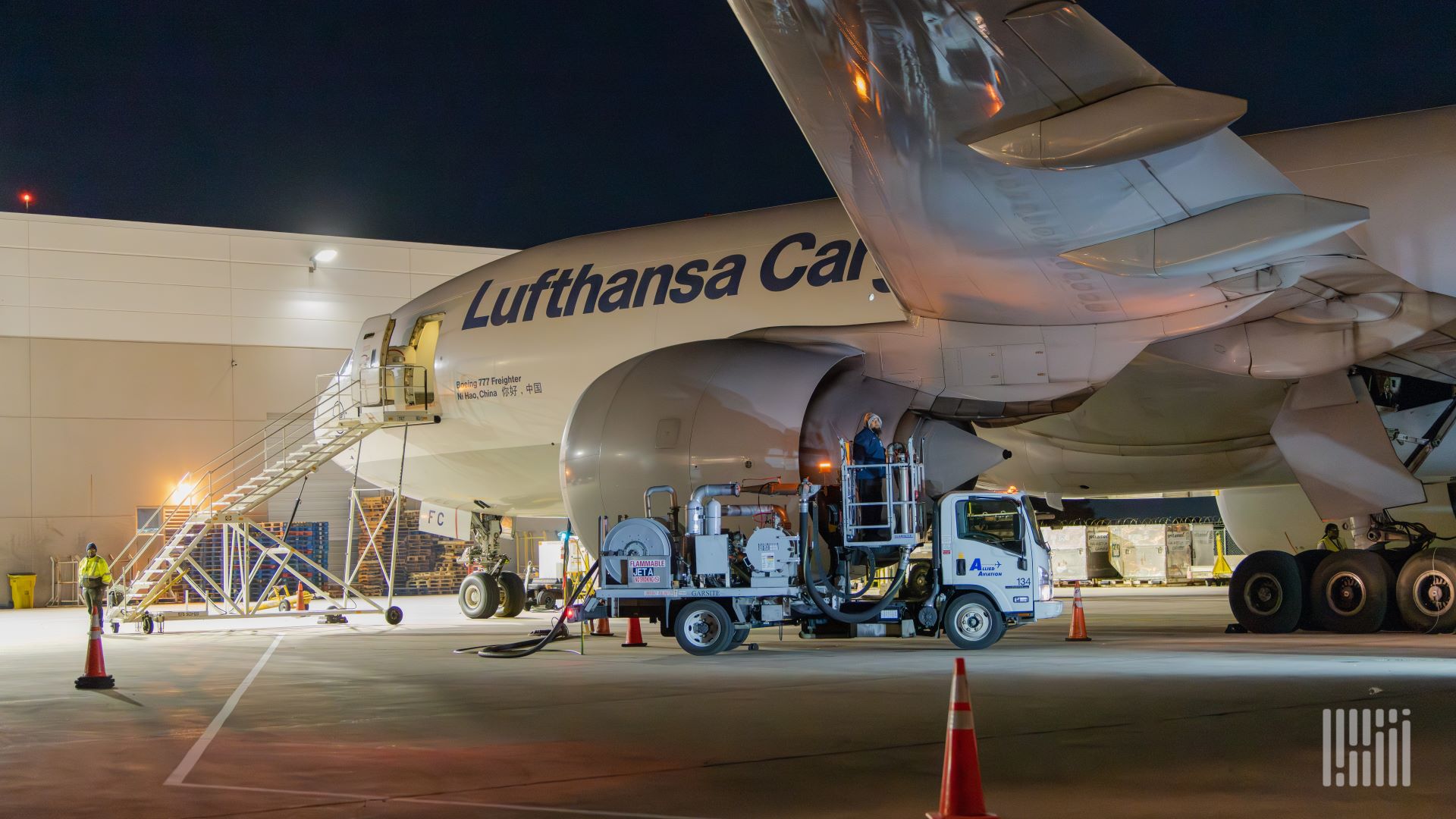
The cargo division of Deutsche Lufthansa reported a 26% increase in adjusted operating profit during the quarter, supported by strong shipping demand, higher freight rates and increased movement of high-value technology equipment.
The results come as Lufthansa Cargo continues investing heavily in its network. The company recently launched a new cross-border e-commerce logistics business and completed the first major phase of a large modernization project at its main cargo hub in Frankfurt.
Lufthansa Cargo Chief Financial Officer Gregor Schleussner said the company is aiming to become one of the world’s three largest cargo airlines by 2030.
“Companies that want to succeed in the long term must be faster, more efficient, and more adaptable than their competitors,” Schleussner said. “Our goal is clear: by 2030, we aim to return to the ranks of the world’s top three cargo airlines.”
Lufthansa Cargo currently ranks No. 14 worldwide based on cargo traffic volume, according to the International Air Transport Association.
The carrier operates 12 Boeing 777 freighters and also sells cargo capacity aboard six Boeing 777 freighters operated by AeroLogic, Lufthansa’s joint venture with DHL Express. That gives Lufthansa access to 18 widebody freighters.
The company also manages cargo space aboard passenger aircraft operated by Lufthansa Airlines, Austrian Airlines, Brussels Airlines, Discover Airlines and SunExpress.
Lufthansa Cargo has also reportedly backed away from plans to return four Airbus A321 freighters to service after removing the aircraft from European and North African routes in April. The company has not publicly explained the decision, although analysts have questioned whether the smaller freighters can operate profitably under current market conditions.
Cargo demand pushes revenue higher
Lufthansa Cargo generated approximately 1 billion euros, or about $1.2 billion, in second-quarter revenue, an increase of 27% compared with the same period last year.
Adjusted operating profit climbed 58% to approximately $133.6 million.
During the first six months of the year, cargo revenue increased 16%, while the division’s profit margin improved 2.2 percentage points to 10.4%.
Cargo demand remained strong during the second quarter, increasing about 3% despite economic uncertainty and disruptions tied to fighting in the Middle East.
Lufthansa also benefited from reduced flight activity by Middle Eastern competitors, including Emirates and Qatar Airways Cargo.
At the same time, some companies shifted freight from ocean shipping to air cargo as they looked for faster and more predictable transportation.
Those conditions helped Lufthansa increase cargo yields by 27% compared with last year. Fuel surcharges also helped offset higher fuel expenses.
Demand was especially strong on routes connected to Asia.
Cargo yields to Asia and on Lufthansa’s newer intra-Asia routes increased approximately 30%, while rates on Middle Eastern routes climbed even higher.
The company said some of its strongest business is now coming from higher-margin industries including pharmaceuticals, semiconductors, automotive manufacturing and artificial intelligence.
One of the biggest new sources of demand is the transportation of large server racks and other equipment used to build AI and cloud computing infrastructure.
Lufthansa Group CEO Carsten Spohr said moving server racks around the world has become a significant part of the air cargo market.
“The increased need for transportation of server racks indeed has almost become an industry-shaping element,” Spohr told analysts.
Because the equipment is extremely expensive and physically large, companies are often willing to pay premium transportation costs to move it quickly and securely.
Spohr said dedicated freighter aircraft are particularly important for those shipments because of the size of the equipment.
Strong demand for semiconductors and AI-related hardware helped global air cargo volumes increase approximately 7% in June, according to research firm Xeneta.
Lufthansa’s available cargo capacity increased about 2% during the quarter. Belly cargo capacity aboard passenger aircraft increased roughly 6%, helped in part by Lufthansa marketing additional capacity from ITA Airways.
Lufthansa Group acquired a minority stake in the Italian airline in 2025.
Lufthansa modernizes Frankfurt cargo hub
Lufthansa Cargo is also spending heavily to modernize its ground operations.
The company is developing a roughly $682 million cargo terminal at Frankfurt Airport covering approximately 3.5 million square feet.
The facility will include automated transportation systems, high-bay storage areas and new technology designed to increase the amount of freight Lufthansa can process through the airport.
The first major section of the project covers approximately 860,000 square feet, an area Lufthansa says is comparable to about 11 soccer fields.
When the project is completed in 2030, Lufthansa Cargo says the facility will be one of the most advanced air cargo hubs in Europe.
The terminal will feature automated warehouse management systems, conveyor systems and a roughly 131-foot-tall automated high-bay warehouse containing nearly 3,000 storage positions for large cargo pallets.
Lufthansa says the high-bay system will be capable of handling more than 300 storage and retrieval movements every hour, roughly doubling current capacity.
The facility will also include automated storage specifically designed for temperature-sensitive and specialized cargo.
Lufthansa expands into e-commerce logistics
Lufthansa Cargo is expanding beyond traditional airport-to-airport freight transportation as well.
The airline recently combined its heyworld GmbH and CB Customs Broker operations into a new company called GlobeCross.
The business will offer cross-border e-commerce logistics, customs clearance and last-mile delivery services under one operation.
The move gives Lufthansa the ability to manage shipments from their point of origin through final delivery instead of simply transporting cargo between airports.
The company sees small-parcel and e-commerce logistics as another area where it can capture additional revenue as global online shopping continues growing.
While Lufthansa Cargo delivered strong results, Lufthansa Group’s overall financial performance was hurt by significantly higher fuel expenses.
The airline group reported approximately $864 million in additional fuel costs compared with last year.
Group operating profit fell 56% to approximately $441 million, while net income dropped nearly 90% to about $141.7 million.