
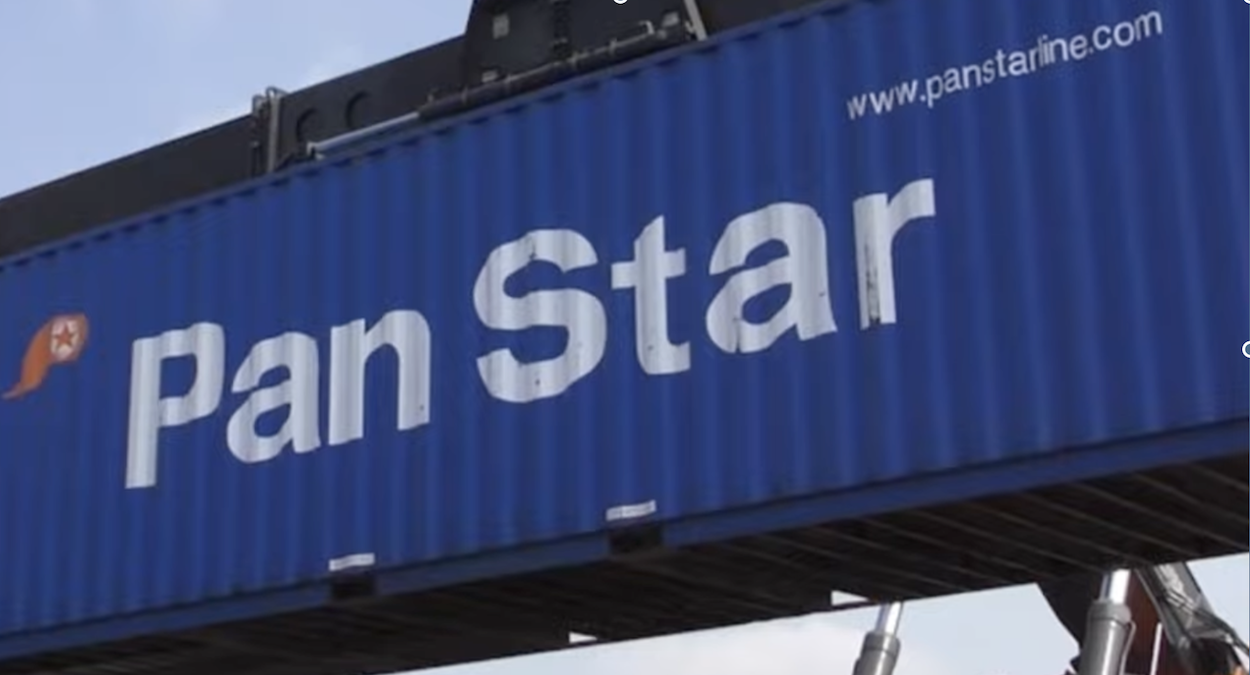
A South Korean container ship has accomplished that nation’s first business round-trip to Europe by way of the Arctic, demonstrating a probably sooner different to the Suez Canal whereas leaving unresolved questions on prices, reliability and geopolitical danger.
The PanStar Acro returned to Busan on Oct. 11, finishing a 50-day voyage that started Aug. 22. It sailed alongside Russia’s Arctic coast to Felixstowe in the UK, then known as at Rotterdam and Gdansk earlier than returning by way of the northern passage, Reuters reported.
The federal government-backed trial carried billed export cargo. South Korean officers intend to make use of the operational information to evaluate whether or not the route can help common business providers, which they hope to launch by 2030.
Shorter passage presents strategic potential
The PanStar Acro reached Felixstowe in about 20 days, in keeping with South Korea’s Ministry of Oceans and Fisheries, as reported by The Korea Herald. President Lee Jae Myung mentioned the voyage shortened the one-way crusing time by 10 days in contrast with the standard Suez Canal route.
The Northern Sea Route runs alongside Russia’s northern coast, providing a shorter connection between Northeast Asia and Europe. For South Korea, the potential advantages prolong past sooner deliveries. Officers see the hall as a method to diversify export-import logistics networks and strengthen Busan’s place as a global maritime hub.
The Oceans and Fisheries Ministry plans to research the voyage’s outcomes earlier than getting ready additional trials and business operations. It additionally sees alternatives for associated transport, shipbuilding, port and logistics companies as a part of a longer-term Arctic growth technique.
The ship sailed with simply 737 loaded TEUs of a deliberate 1,300-TEU cargo.
In September–October 2025, the container ship Istanbul Bridge carried out a China-Europe Arctic Specific trial, departing Ningbo-Zhoushan on Sept. 23 and reaching Felixstowe in about 20 days. Maersk (OTC: AMKBY) additionally carried out a 2018 Arctic container-ship trial.
Analysts say that business viability will rely upon schedule reliability, the price of slowing or diverting to keep away from ice, particular insurance coverage premiums and extra gas consumption. These elements may offset a few of the benefits of a shorter crusing distance.
Seasonality is one other limitation. The Northern Sea Route is mostly extra accessible throughout hotter months as sea ice retreats, however circumstances stay unpredictable and a few ships require icebreaker help.
The Arctic passage additionally introduces geopolitical problems. As a result of it follows Russia’s shoreline, South Korea consulted Moscow in regards to the voyage, together with potential help if the vessel encountered ice-related issues. Reuters reported that expanded cooperation may create friction with Western allies in search of to isolate Russia over its warfare in Ukraine.
Environmental advocates have additionally warned that higher business visitors may harm fragile Arctic ecosystems and speed up ice loss. The initiative factors up the strain between exploiting a route made extra accessible by warming temperatures and defending the area.
Learn extra articles by Editor right here.
Learn extra:
How new capability is elevating charges in chaotic ocean market
No. 2 container line finding out US-UK route for nuclear ships
Trans-Pacific going through new reserving dangers as reliability sinks
Container ship assaults escalate in Strait of Hormuz
New Lengthy Seashore document as quantity nears 1M containers
The publish Time-definite ocean supply? Container ship completes new Arctic route trial appeared first on BigRig.