
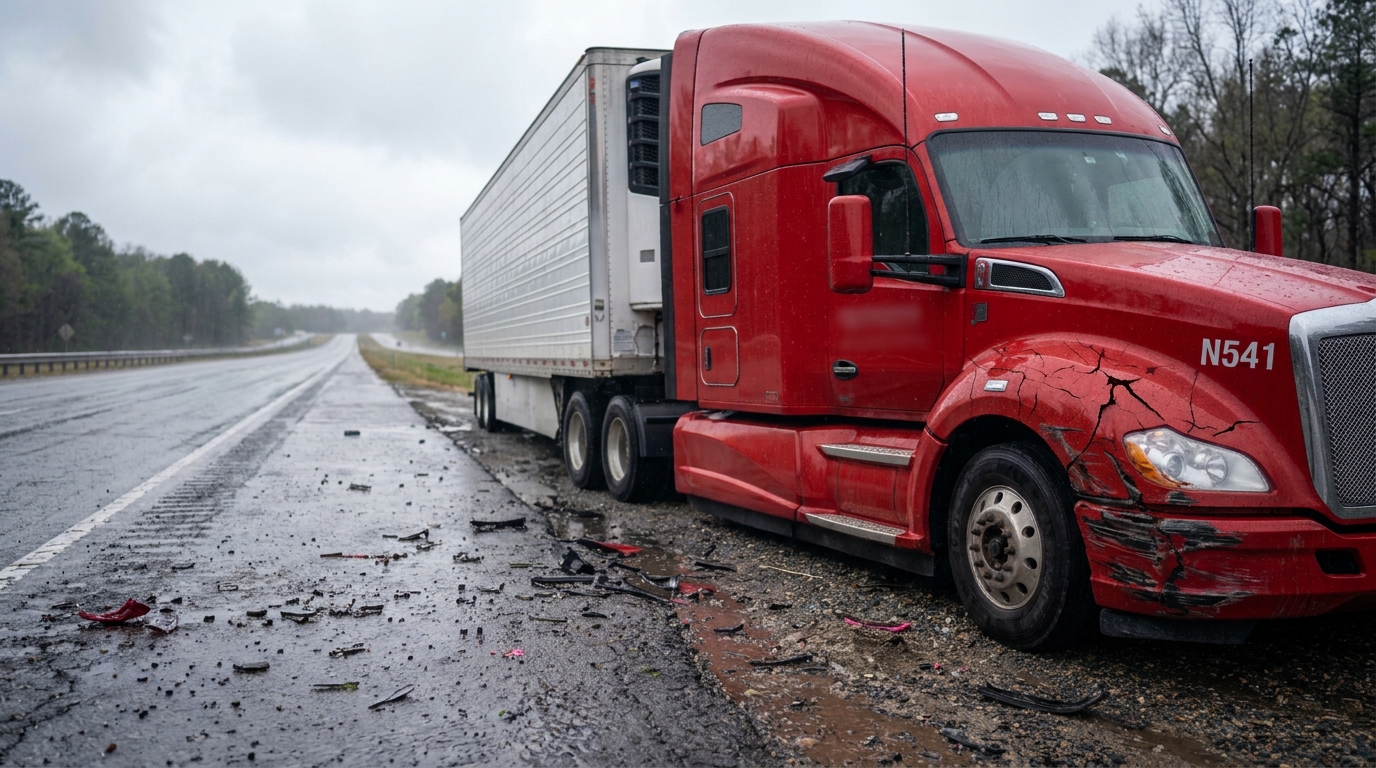
Cameras can present what occurred on a route. Whether or not they assist a driver keep away from the subsequent
collision relies on two issues: what the digicam tells the driving force on the highway and what
your security staff does with the footage afterward.
Fleet security managers know the sample. Footage builds up quicker than anybody can
overview it, investigations crowd out teaching and management desires proof that the
program is working. Including cameras received’t resolve that by itself. The repair is a transparent plan
for what to overview, learn how to coach and what to measure.
Reply the 4 questions beneath to seek out your fleet’s video security maturity stage, then
use the steering for that stage to decide on the next move. Deal with the outcome as a beginning
level for planning.
4 inquiries to assess your program
Select the reply that greatest describes how your fleet works right now.
- When do you often discuss with a driver a few security subject?
- Solely after a collision or one other incident.
- After we overview video or telematics information to ascertain fault or assist a declare.
- When in-cab voice teaching flags a habits and a supervisor follows up on patterns.
- Earlier than an incident happens, when threat insights flag a driver for consideration.
- How does your staff discover security occasions to overview?
- Solely after a collision or one other incident.
- After we overview video or telematics information to ascertain fault or assist a declare.
- When in-cab voice teaching flags a habits and a supervisor follows up on patterns.
- Earlier than an incident happens, when threat insights flag a driver for consideration.
- How linked is your video information to the remainder of your fleet operations?
- Video and telematics stay in separate programs, if now we have telematics in any respect.
- Our cameras are cloud-connected, however we use them primarily to document proof.
- Video occasions sit alongside engine and driving information in a single platform, which provides context for teaching.
- Video, telematics and predictive analytics work collectively to estimate collision threat.
- How do you present the worth of your video program?
- We don’t measure it formally as a result of cameras are primarily an insurance coverage requirement.
- We monitor driver exonerations, dismissed claims and legal responsibility financial savings.
- We monitor modifications in particular dangerous behaviors and accomplished teaching classes.
- We monitor fleet collision charges and complete price of threat in opposition to a baseline or benchmark.
Stage 1: Reactive
Your cameras document incidents, however footage often comes out solely after one thing
goes improper. By then, chances are you’ll be coping with an injured driver, a broken car and
an open declare. Drivers hardly ever get suggestions exterior these incidents and near-misses go
unseen, so security conversations develop into tied to unhealthy information.
What strikes you ahead: Connectivity. Cloud-connected cameras, equivalent to Geotab’s
GO Focus Plus and GO Focus Professional, add occasion footage mechanically once they detect
dangerous driving. Your staff not has to retrieve video by hand, investigations transfer
quicker and managers can discuss with drivers a few habits earlier than it turns into a behavior.
Stage 2: Defend
You could have proof when an incident occurs. That proof can shield drivers from
false accusations and your organization from fraudulent claims, which is an actual
accomplishment.
Defending incidents nonetheless takes administration time and authorized effort, even when the
final result is in your favor. A program constructed across the aftermath additionally does little for the
driver who has by no means been advised they observe too intently.
What strikes you ahead: Suggestions because it occurs. Cameras with in-cab voice teaching,
equivalent to GO Focus Plus and GO Focus Professional, communicate up once they detect distraction,
fatigue or tailgating. Drivers can self-correct on the spot with out ready for a supervisor.
When an alert displays what a driver actually did, the driving force is extra more likely to settle for the
teaching than dispute it, and managers spend much less time constructing circumstances.
Stage 3: Forestall
Drivers get teaching near the habits, dangerous occasions are declining and your staff isn’t
buried in false alerts. You’ve additionally constructed one thing many applications battle with:
teaching that drivers see as honest.
The following problem is quantity. As your fleet or program grows, so does the variety of
occasions. Your staff must know which occasions deserve consideration right now and which
drivers want follow-up.
What strikes you ahead: Prioritization. Search for software program that ranks occasions by severity,
so probably the most severe ones attain managers first. It must also present the important thing second of
every clip with velocity and site, so a supervisor can decide an occasion with out watching
the complete video. Geotab’s video platform does each. It additionally flags drivers whose driving
patterns level to a better probability of a collision, so managers can step in earlier than an
incident happens.
Stage 4: Predict
Your program makes use of threat insights to step in earlier than habits result in collisions. The problem
now’s proof. A collision that didn’t occur leaves no incident report or declare, so the
worth of that work might be arduous to point out to finance, management and insurance coverage carriers.
What strikes you ahead: Monitoring threat over time. Preserve a documented document of how
your fleet’s collision threat has modified. Evaluate dangerous driving earlier than and after teaching,
utilizing your fleet’s personal historical past because the baseline. Then watch how driver threat modifications from
month to month. Geotab’s security reporting covers each. Convey that document, together with
teaching completion and complete price of threat, into conversations with management and
carriers.
Begin with one hole
Most fleets don’t match neatly right into a single stage. You will have robust proof practices
however an inconsistent teaching routine, or good teaching with no clear technique to report
outcomes. Decide the world that held your solutions again and work on it first. Clarify to drivers
how video helps teaching, give managers a constant overview routine and monitor a
few measures tied to your security targets.
See how Geotab’s unified video security brings video and fleet information collectively to assist your
staff transfer to the subsequent stage.
The submit From extra footage to extra focus: Discover your fleet’s videosafety stage appeared first on BigRig.