
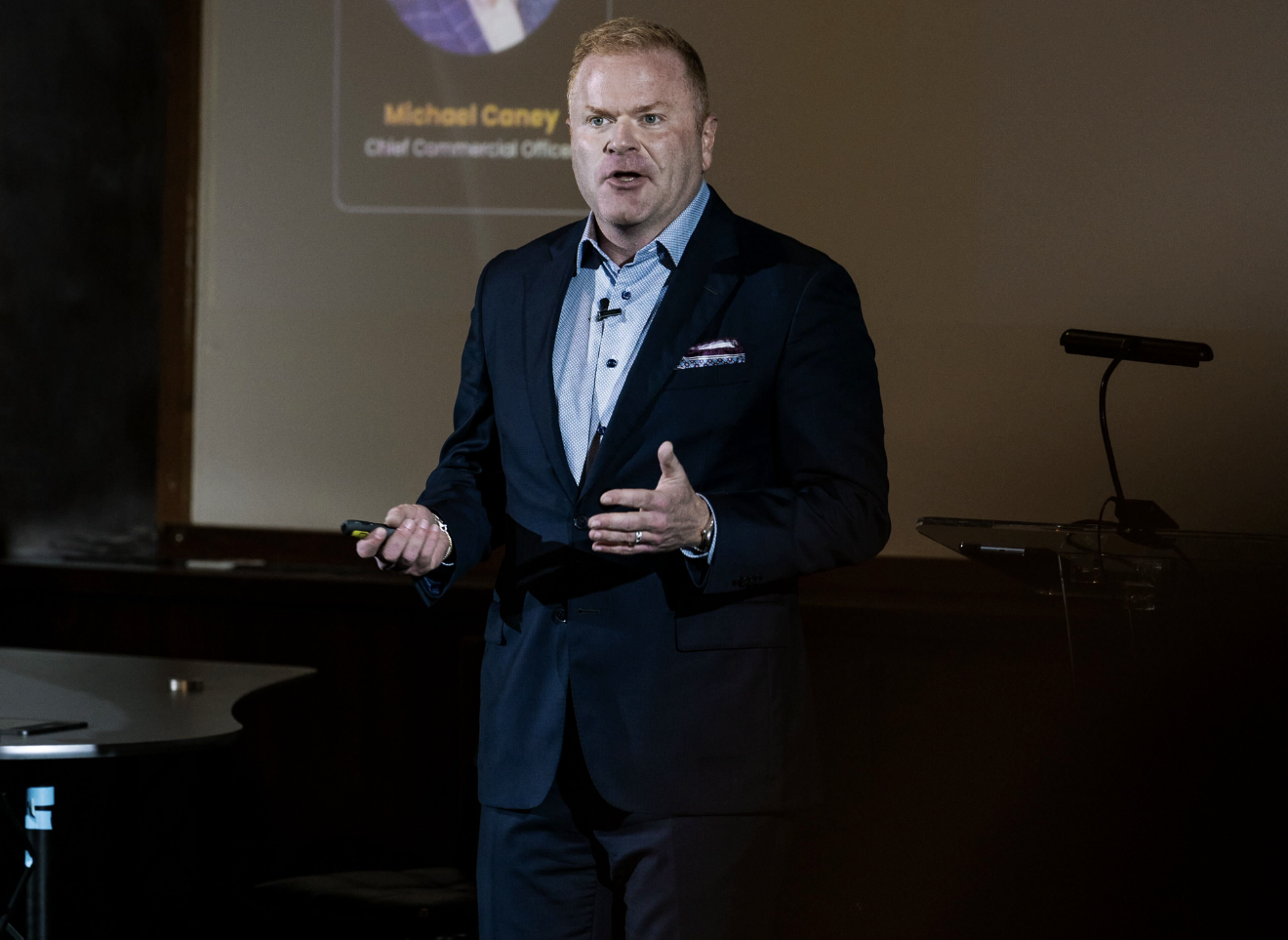
The freight business has spent years and actual cash chasing fraud, piling up extra monitoring, extra information, and extra consciousness than it has ever had, and the losses hold climbing anyway, which is the paradox Michael Caney, Chief Buyer Officer on the carrier-identity platform Freeway, got down to unpack on the BigRig Dealer Compliance Symposium, and his reply started with a reframe many of the room had by no means sat with, that fraud is just not actually the issue in any respect however a sign pointing at a deeper one the business retains refusing to call.
Caney, who spent 20 years as an operator earlier than transferring to the know-how aspect, began from a tough reality. No business has ever eradicated fraud. He pointed to healthcare, the place the entire addressable marketplace for fraud retains rising regardless of a long time of combating it, and to the truth that none of us have switched off our personal credit score monitoring as a result of the risk merely doesn’t disappear. Fraud, he argued, is a symptom that tells you the place to go look, and the freight enterprise has spent its vitality swatting on the symptom as a substitute of treating the situation beneath.
Three Substances, And An Business Full Of Them
Fraud wants three issues to work, Caney stated, the prospect of achieve, anonymity, and urgency, and freight palms criminals an abundance of the final two. A dealer beneath strain to cowl a load earlier than a shipper’s clock runs out is a dealer tempted to chill out an ordinary, and a nasty actor who can keep nameless lengthy sufficient to take advantage of that pressing second can steal freight, endanger the motoring public, and transfer on. The uncomfortable half is that brokers sit on the useless heart of this, which Caney framed as both a curse or a possibility relying on how the business chooses to reply, with the roughly 600 million greenback dealer verdict hanging over the symposium as a reminder of how costly the curse model will get.
The Drawback Is Not Knowledge, It Is Enforceability
Right here Caney made his sharpest level. The business doesn’t really endure from an absence of requirements. Everybody within the room has requirements. What it lacks is requirements which can be shared, arbitrated, and above all enforceable, and a system the place ignoring them carries a consequence. He drove the purpose dwelling by naming three teams that feed brokers huge quantities of knowledge whereas carrying, in his telling, little or no accountability, the insurance coverage brokers, the telematics suppliers, and the factoring firms that gather premiums and receivables off the freight transaction but had been nowhere to be discovered at a compliance symposium. When an insurance coverage agent submits unhealthy information, misses a cancellation, or lets a scheduled merchandise lapse, the dealer making a hiring resolution on that information is the one left uncovered.
The numbers he gave on insurance coverage information alone had been hanging. Of roughly 10,000 brokers feeding the system, he stated about 40 cowl practically half the autos whereas 200 cowl solely 3 %, which suggests 1000’s of small sources push information that brokers depend on for vetting with virtually no continuity, timeliness, or accuracy. Having that a lot information, Caney stated, is just not the identical as having the ability to implement something with it.
Years Of Chasing The Sign
The explanation freight is on this spot, he argued, is that it has conditioned itself to run on the sign reasonably than the supply. One thing goes lacking, one thing is late, a quantity is off, and the response is to name a TMS supplier or a vendor to repair that one factor, then transfer to the following one. He walked the room again to the period earlier than load monitoring was common, when shippers started promoting the little blue dot for a greenback a load with the promise that each one issues would vanish, then pushed the fee onto brokers when carriers balked. Years later the business tracks virtually the whole lot, spends closely to do it, and nonetheless watches fraud rise.
The spending with out accountability is its personal inform. Caney stated that when brokers audit their very own know-how payments, the monitoring line is big, constructed on quantity, on pings and searches reasonably than on outcomes, and but those self same brokers will balk at a 500 greenback price tied to a assured load. His blunt arithmetic was that 500 {dollars} is cheaper than 600 million, and that with the whole lot a dealer already pours into monitoring, the load should be on time to start with.
Verified Knowledge Versus The Knowledge You Assume You Have
One of many extra pointed moments was in regards to the hole between reported and actual efficiency. Carriers routinely hand over monitoring data exhibiting 90 % compliance, Caney stated, and when Freeway runs these data by way of its personal verification the true determine typically lands nearer to 75 %, exposing chameleon carriers and operators gaming the scorecard. For a very long time, assembly a buyer’s scorecard on paper was sufficient to maintain the freight flowing, with no consequence for the seller that oversold the monitoring or the service that faked it. What has modified, in his framing, is that the business lastly has a stick. Freeway will de-certify a telematics supplier whose community is riddled with carriers that steal, drop a service, or refuse to just accept insurance coverage certificates from an agent whose information can’t be trusted.
Threat Has Moved From Guidelines To Course of
Caney’s forward-looking argument was that the business’s danger has shifted from its guidelines to its processes. For years brokers believed the reply was higher guidelines, they usually accrued them, one oddly particular exception at a time, till configuring a brand new rule went from a six-month assertion of labor to a thirty-minute activity. The outcome, he stated, is that brokers now maintain extra guidelines than ever and override an enormous share of them, so many who the foundations are not actually their very own. The longer term is just not extra information for its personal sake or extra guidelines layered on high, however less complicated selections baked into the workflow, powered by community results reasonably than tribal information residing in a single particular person’s head.
That’s the reason he stored returning to automation and context. A load, in his view, is turning into much less like a truck going from A to B and extra like a completely digital monetary transaction with many events contributing as to if it conforms or not. Good vetting shouldn’t simply verify a service is passable or passes a rule set, it ought to verify the service really carries the insurance coverage to haul this particular load, catching the buried coverage exceptions, the commodity that’s not coated, the legal responsibility restrict that falls brief. None of that, he argued, belongs on a sticky notice in a cubicle, and monitoring ought to provoke robotically reasonably than relying on somebody asking a driver to just accept an app, as a result of the carriers doing the fitting factor present up, join, and are straightforward to confirm, whereas those that resist are the exception value inspecting.
A Buttonwood Second For Freight
The place this goes subsequent, Caney stated, is towards ensures on the transaction stage, borrowing the language of lending, the place conforming and non-conforming loans turned prime and subprime. Freeway, he famous, has assured nicely over a billion {dollars} in freight and barely paid out, the exceptions tracing again to somebody gaming a certification. However the true shut was a name to collective motion. He noticed that of his 1,500 clients, solely 243 had enrolled within the stricter Efficiency Group customary that prices nothing however requires following the foundations, and that these 243 had moved one million hundreds with what he referred to as whole peace of thoughts, leaving the apparent query of the place the opposite 1,300 had been.
To make the stakes plain he reached for historical past, citing Dee Hock, the founding father of Visa, and the warning that an business that won’t govern itself from inside might be ruled from with out. He invoked the Buttonwood Settlement of Could 1792, when a pair dozen brokers standing beneath a tree on Wall Road agreed on the requirements and the conduct that might outline their commerce and, in doing so, seeded what turned the New York Inventory Change. The lesson he drew was that requirements by no means emerge from a vendor’s profitable funding spherical or an incredible pitch, they emerge when the contributors themselves get collectively and determine what is appropriate and what’s not, and connect penalties to the distinction. The businesses that come out of the present fraud disaster strongest, he predicted, would be the ones that cease ready and begin setting these necessities for each celebration within the transaction, from insurance coverage brokers to telematics suppliers to factoring firms.
Why It Issues
Freight doesn’t have a knowledge downside, it has an enforcement downside, and no quantity of extra monitoring or rule-writing will repair a system the place the events feeding the information face no consequence for feeding it badly. Caney’s problem to brokers is that the instruments to confirm carriers, automate vetting, and assure hundreds exist already, so the true variable now’s whether or not the business will govern itself by agreeing on shared, enforceable requirements, or hold chasing the following fraud sign till it’s ruled from the surface by guidelines it had no hand in writing.
This text is predicated on a keynote by Michael Caney, Chief Buyer Officer of Freeway, on the BigRig Dealer Compliance Symposium. Figures and claims about carriers, information sources, and the platform are as introduced by the speaker. The Dee Hock and 1792 Buttonwood Settlement references are his, used to border a name for business self-governance.
The submit The Corporations That Write The Requirements Will Personal The Subsequent Decade Of Freight appeared first on BigRig.