
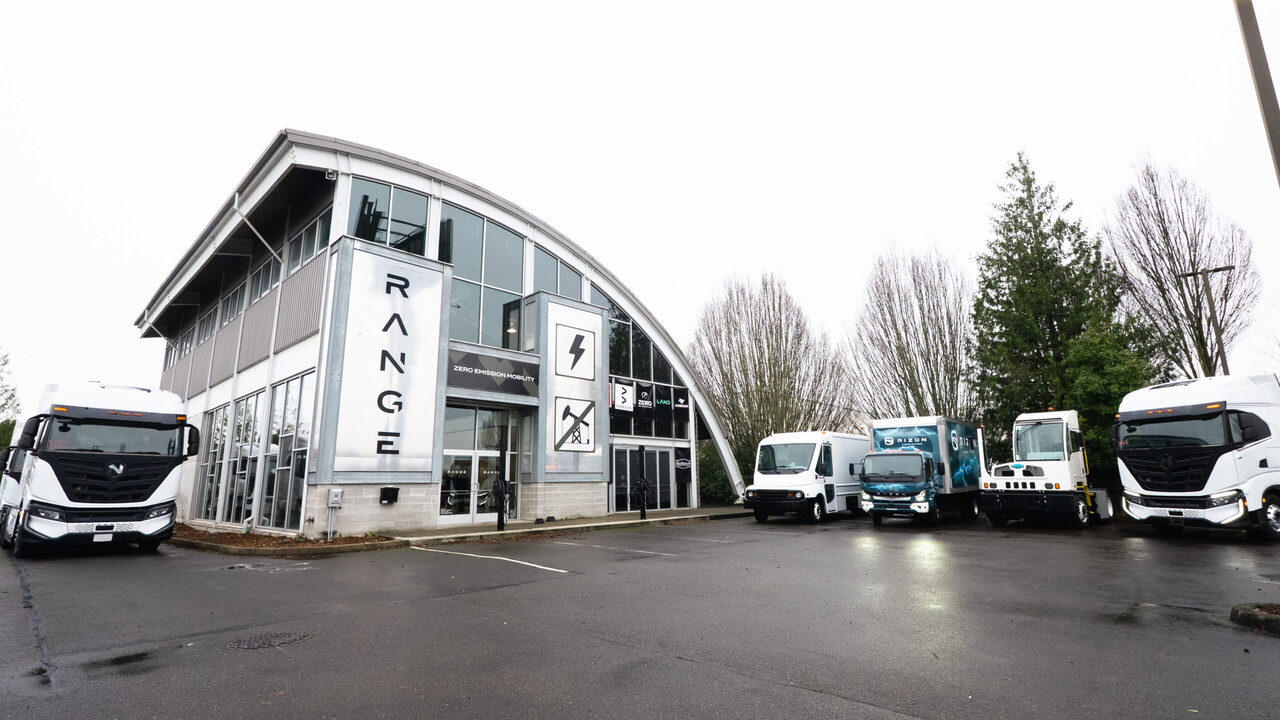
Johannes Ariens sells hydrogen semis, and he thinks the push to wash up trucking is aimed too excessive. Incentive packages and the broader business are fixated on Class 7 and eight tractors, stated Ariens, CEO of Vary Zero Emissions, in an interview with BigRig. The vehicles able to go electrical as we speak are medium-duty Class 4, 5, and 6 fashions, he stated.
Vary Zero Emissions is a seller group that sells solely zero-emission industrial automobiles. Its manufacturers run from Zero Bikes as much as Class 8 vehicles, and it has no tie to Vary Power, the electric-trailer firm that shares its title.
The lineup grew in August. Vary turned a certified seller for Hyundai’s XCIENT Gasoline Cell, a hydrogen Class 8 truck, with Washington as its major territory. It additionally folded Ziegler Truck Group’s zero-emissions enterprise into the Vary model and purchased the West Coast operations of Ethero Truck & Power. Collectively the 2 offers moved the corporate from one Pacific Northwest location into the Midwest and California, Ariens stated.
Most industrial truck customers run medium-duty vehicles, he stated, and lots of of them can cost on the form of energy a small enterprise already has.
“Charging two automobiles on Degree 2 is like, do you’ve gotten a washer and an air compressor at your own home? Should you do, you may set up two Degree 2 chargers and cost them in a single day and go to work daily to your shift,” he stated. “You’re good to go in case you’re driving lower than 150 miles a day.”
The case for medium-duty vehicles first
Ariens describes electrification as a development, from e-bikes and small vehicles just like the Chevy Volt as much as Rivians and the Hummer EV. Every step constructed charging the subsequent one may use.
“We’re so centered on Class 7 and eight that we’re attempting to leap a really pure development of electrification,” he stated. “You can not cost a Class 8 semi on a Degree 2. It actually received’t do it.”
Class 8 charging continues to be early. Tesla, which formally opened its Semi manufacturing facility in Sparks, Nev., on Sept. 24, expects greater than 30 Megawatt Charging System stations by the top of the 12 months.
“It’s years till that’s proliferated, and till all of the legacies bounce in,” Ariens stated.
Medium-duty vehicles have already got large patrons. “We’ve acquired FedEx, we’ve acquired Rivian, we’ve acquired Amazon,” he stated. In September FedEx ordered 2,000 all-electric vehicles from Harbinger, one of many manufacturers on Vary’s roster.
Most of trucking’s personal ranks are small: of almost 580,000 lively U.S. motor carriers, 91.5% function 10 or fewer vehicles, in keeping with American Trucking Associations information drawn from U.S. Division of Transportation figures as of June 2025. BigRig has reported on that lengthy tail. Ariens would steer extra voucher cash their manner.
“We must always improve the voucher quantities for Class 4, 5 and 6,” he stated. “Simply get all these small companies with 5 vehicles or much less into their EVs.”
State incentive packages that refill
Federal assist for zero-emission vehicles is pulling again, Ariens stated, on the similar time California and Washington run “essentially the most vital medium- and heavy-duty industrial incentive packages in historical past.”
California’s Clear Truck and Bus Voucher Incentive Undertaking, referred to as HVIP, has delivered greater than $1 billion since its 2009 launch, in keeping with Gov. Gavin Newsom’s workplace. In Could the state added the California Clear Gasoline Reward, a rebate for electrical medium- and heavy-duty vehicles with $250 million accessible this 12 months and greater than $1 billion anticipated by 2030, funded by the Low Carbon Gasoline Commonplace. BigRig broke down how these packages stack in June. Washington launched its Zero-Emission Incentive Program on April 29 with $112 million in vouchers from the state’s Local weather Dedication Act.
“These are steady, recycled funding streams, normally coming from carbon tax credit, designed to refill,” Ariens stated. “They’re not one-shot packages.”
Many industrial fleets change vehicles on a five- to seven-year cycle, he stated, and a program that refills matches how they purchase.
“I’m not going to purchase a brand new truck and do away with it subsequent month as a result of I would like an EV,” he stated. “I’m going to life-cycle that truck, get my full depreciation out of it, after which cycle it.”
As soon as a expertise reaches 5% of latest adoption, Ariens stated, it tends to stay.
“That’s precisely what these authorities incentive packages are designed to do: assist get from zero to five, which may be very onerous,” he stated.
The place hydrogen matches in Class 8
Ariens calls the battery-or-hydrogen debate binary pondering.
“I feel the way forward for Class 8 is totally each,” he stated.
Battery-electric works for drayage, he stated, as a result of port vehicles want much less vary and might carry a smaller battery. Weight is the trade-off: federal legislation offers battery-electric vehicles a 2,000-pound allowance on the facility unit, as much as 82,000 kilos gross. Each added pound is a pound of freight the truck can not haul, Ariens stated.
Hydrogen is beginning at ports too, as a result of vehicles there run constant every day routes from a single fueling level. Ariens named Lengthy Seaside, Oakland and the Vancouver space as the primary locations a heavy-duty hydrogen truck can gas as we speak. Shell constructed a heavy-duty station on the Port of Lengthy Seaside, in keeping with the California Power Fee, and HTEC opened a station for Class 7 and eight fuel-cell vehicles on the port terminal in Delta, British Columbia, in June.
The 30-truck NorCAL ZERO mission runs XCIENTs in drayage out of the Port of Oakland and launched in Could 2024, in keeping with the California Gasoline Cell Partnership. Ariens watched these vehicles at a Port of Oakland occasion in September.
“These vehicles had been going by all day, out and in. No large deal,” he stated. “Then these vehicles are going 300, 400 miles, and it’s, ‘Cool, let’s put one in every of these in Sacramento.’”
The XCIENT has additionally moved east. Hyundai’s Metaplant close to Savannah, Ga., started working 21 of the vehicles in December 2024, and a Rutgers-led pilot at Port Newark in New Jersey deliberate to begin testing six in early 2026, in keeping with Transport Matters.
For all of that, Ariens retains returning to the smaller vehicles.
“That’s my get together line, and the factor I stomp my toes about daily,” he stated. “Why are we not making it as straightforward as doable to go to Class 4, 5 and 6, after which Class 7 and eight will remedy its personal drawback?”
The submit Why one zero-emission truck seller desires large rigs to attend appeared first on BigRig.