
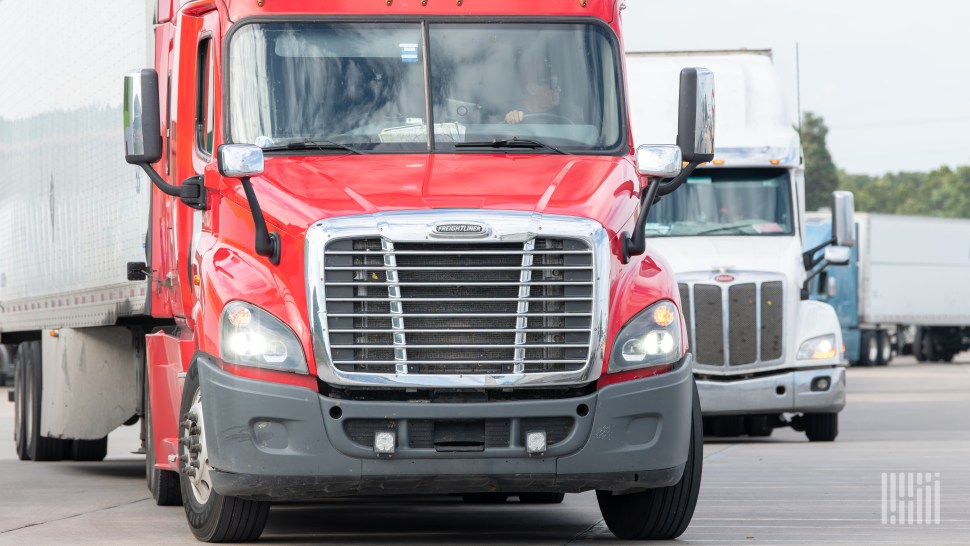
Scott Cornell, EVP and Crime and Theft Specialist at SPG Cargo & Logistics and Chair of TAPA Americas, said both thefts involved drivers who continued moving the freight after the escorts were hit instead of stopping or calling for help.
Cornell, who has spent more than 30 years investigating cargo theft, discussed the tactic during an interview on BigRig’ Fraud Watch podcast.
The method, described as a “bump-and-run,” is part of a growing wave of thefts involving high-value technology and data center equipment.
“We’ve seen a big concentration around the theft of high-tech loads,” Cornell said, identifying data center freight as one of the biggest targets.
Since June 3, Cornell said at least $110.6 million worth of technology-related cargo has been reported stolen.
Some of the individual thefts have been massive.
Cornell cited losses ranging from roughly $2 million all the way up to $38 million, along with separate thefts valued at approximately $8 million, $12 million, $14 million, $20 million and $24 million.
“When you add all those up, the impact is absolutely tremendous,” Cornell said.
The massive values involved in these shipments have also pushed the average dollar amount lost in cargo theft cases significantly higher.
Thieves deliberately hit security escorts
Two of the recent technology loads were traveling with security escorts when thieves made their move.
“Individuals intentionally crashed into the security escorts on those loads,” Cornell said.
Once the escort vehicles were tied up in the collision, the truck drivers continued down the road with the cargo.
According to Cornell, that part of the scheme is critical.
A legitimate truck driver would normally stop after seeing the escort vehicle involved in an accident, contact authorities or move to a secure location while waiting for instructions.
Instead, the drivers involved in these cases kept going.
Cornell believes poor driver and carrier vetting helped make the thefts possible.
“If the drivers are bad guys, when the escorts get bumped, the drivers then take off,” he explained.
Without a compromised driver behind the wheel, simply crashing into the escort vehicle would likely accomplish very little. The truck would stop and authorities could quickly become involved.
Cornell said that is exactly why the tactic worked in both cases.
While the incidents are concerning, he cautioned against calling bump-and-run cargo theft a nationwide trend based on only two known cases.
Still, the attacks show how far organized cargo theft groups may be willing to go when millions of dollars worth of freight is involved.
Basic carrier checks could stop some thefts
Cornell also pointed to another recent technology theft that showed just how important basic carrier verification has become.
In that case, a simple Google search showed the trucking company involved primarily operated as a hotshot auto hauler.
Despite that, the company was reportedly assigned specialized freight outside its normal operating area and without equipment that matched the shipment.
“That was just a simple Google search,” Cornell said.
Those types of warning signs can sometimes be uncovered in minutes before a truck ever reaches the loading dock.
For companies moving expensive technology, electronics, metals or data center equipment, Cornell said the carrier’s operating history, equipment, location and normal business activity should all make sense before the freight is released.
Cargo theft rings are building their own supply chains
Today’s cargo theft organizations are also operating much differently than the smaller regional crews investigators dealt with years ago.
According to Cornell, organized criminal groups now have transportation and distribution networks capable of moving stolen freight extremely quickly.
“These international crime rings have created their own economy,” Cornell said.
Stolen shipments can be moved through cross-docks, transferred between trucks in parking lots and given new paperwork before being pushed back into the supply chain.
Cornell said these thefts are often far from random.
“People still think some of these thefts are random, and they’re not,” he said. “They have customers, they have a customer base, and they’re filling orders.”
A stolen load of televisions, for example, could arrive at a cross-dock and have its paperwork changed to simply say “electronics.”
Another transfer could change the description again to something even more generic, such as freight of all kinds.
By the time someone encounters the trailer later in the supply chain, identifying what is actually inside becomes much more difficult.
Paper bills of lading remain a major weakness
Traditional paper bills of lading can make the problem even worse.
Cornell said criminals can alter shipping documents and replace detailed descriptions of stolen products with broader commodity descriptions.
“I can camouflage it just by falsifying that paperwork,” he said.
Once the paperwork has been changed, workers farther down the supply chain may have little reason to break seals or inspect what is actually inside the trailer.
That gives thieves another layer of protection while moving stolen freight.
Cornell estimated that six or seven out of every 10 cargo loads stolen in the United States eventually leave the country.
In the past, regional cargo theft crews were more likely to store merchandise and slowly sell individual products online or through local buyers.
International theft organizations can now move entire truckloads through established networks almost immediately.
That leaves investigators with a much smaller window to recover the freight.
Verification needs to happen before the truck arrives
Cornell said transportation companies should consider secure digital bills of lading that can be used alongside traditional shipping paperwork.
A protected digital record could make it easier to identify changes involving product descriptions, pallet counts or other shipment information.
“It’s all about time. How quickly can you respond?” Cornell said.
The faster a company realizes something is wrong, the better the chance investigators have of recovering the freight before it is transferred or moved out of the country.
But technology by itself will not solve the problem.
Carrier and driver verification still needs to happen before valuable freight is released.
Companies should verify that the driver, trucking company, equipment, operating history and location all match the information connected to the shipment.
When one part of that story does not make sense, it should raise a red flag.
That becomes even more important when a trailer is carrying millions of dollars worth of data center hardware or other high-value commodities.
Frontline employees need to recognize warning signs
Cornell also said cargo security cannot be left entirely to corporate security departments.
Employees responsible for assigning loads, checking drivers or working around loading docks need enough training to recognize when something does not look right.
“We’re not trying to make the frontline employee an expert,” Cornell said. “We’re trying to give them a Spidey Sense so they raise their hand.”
That same awareness should extend to sales teams.
When companies aggressively price freight or rush transportation arrangements, they still need to leave enough room for proper security and carrier verification.
A mistake made while choosing the carrier can create a security problem long before the truck ever arrives at the shipper.
Why it matters
Data center equipment and other high-value technology loads can easily be worth millions — and in some cases tens of millions — of dollars.
That makes even one failed carrier or driver verification extremely costly.
The recent bump-and-run cases also show that security escorts alone may not be enough to protect a shipment when the person driving the truck is already part of the theft.
The biggest lesson is simple: security starts before the load ever leaves the dock.
Carriers, drivers, equipment, operating history and shipment information all need to be verified before high-value freight is released. When those details do not line up, companies need to stop and investigate before handing over the load.
Once a compromised truck leaves the facility, even a security escort may already be too late.